Unknown fatherhood
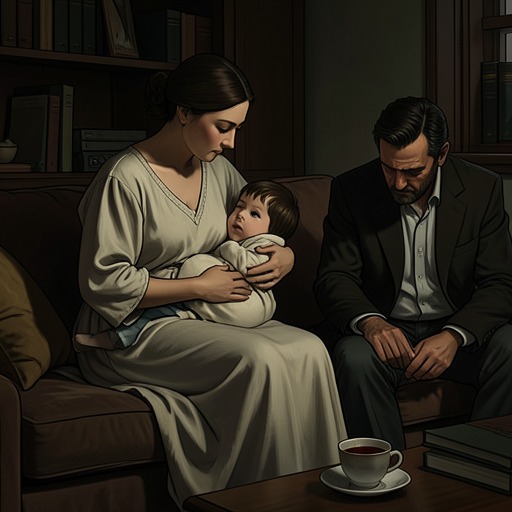
The Journey CollectionUnknown paternity shapes the central reckoning of Travis McCoy’s return to Clarendon: for years, Travis does not know he has a son, while Max does not know that the football star he admires is his father. Their reunion makes the hidden history suddenly present, but the fact of biological parenthood is only a beginning. Trust, responsibility, and the decision to build a family must follow.
Identity and Background
The story opens with Travis already at a turning point. A shoulder injury has ended the professional football career he pursued after leaving Clarendon for the University of Texas and being drafted by the Miami Sharks. After six years as a player, he is unsure what comes next. Jack Garrison, principal of Clarendon High School, invites him home for the school’s Homecoming celebration, where the Broncos are having their best season in a decade. Travis agrees because he needs to confront his past, not knowing that the return will disclose how closely that past is tied to his future.
That past includes Penelope Stone, his high-school sweetheart. Travis left Clarendon to pursue football, and the separation also meant that he was absent from the life of the child they had together. Penelope knows Max is Travis’s son; Travis knows nothing about Max. Max, meanwhile, has grown up seeing Travis as a hero, without knowing that his admired athlete is also his father. The concealed paternity is therefore not simply a fact withheld from Travis: it is an uneven distribution of knowledge across a family, with Penelope carrying the history and both father and son approaching the relationship from opposite sides of the same secret.
The Homecoming Revelation
Travis’s return first places him amid reminders of the community he left. The town has changed little, and the businesses along Main Street display their support for the local football team. At the high-school gym, a pep rally fills the bleachers and walls; cheerleaders wave maroon, white, and silver pompoms while the varsity players sit in their jerseys. Travis watches from the doorway, recalling the Friday afternoons when he had sat before the same community, both loving and hating the attention.
Before the reunion with Penelope, a boy asks Travis to sign a brown leather football. Travis takes the ball and a black marker, ready to write the name Max gives him. Penelope’s sudden appearance interrupts the ordinary exchange. Seeing Travis with the child, she rushes over and pulls Max back. Max wriggles free, embarrassed, and calls her Mom. The single word changes the scene: Travis understands that the boy is her son, and, seeing that Max must be about ten, quickly works out the likely truth. He turns to Penelope demanding an explanation, confronted at once with the years he missed and the family he did not know existed.
The revelation is also emotionally complicated by what Max already believes. Penelope explains that she has not told him Travis is his father because he has idolized Travis for so long; she fears that learning the truth could make Max hate him. Travis, by contrast, cannot accept the possibility of simply leaving again. He insists that he cannot pretend Max is not his child, even as Penelope asks him to understand that disclosure could unsettle the boy’s image of his hero. The secret has protected Max from an explanation of his father’s absence, but it has also kept Travis from the chance to know and care for him.
The Cost of Silence and the Choice to Stay
Travis’s first response mixes shock with the sense of a right denied. He tells Penelope she should have informed him because he deserved to know. She agrees, but explains that he was not there and that she could not let the child’s existence cost him his chance to pursue his dream. Travis corrects her when she refers to Max as her son, insisting that Max is their son. Yet his hurt briefly turns into suspicion: having only just learned he is a father, he asks whether Max is really his. Penelope recoils at the question. The exchange shows how the revelation creates more than instant intimacy; it exposes years of competing claims, regrets, and pain that the two adults must face directly.
The asymmetry of knowledge also leaves Travis vulnerable to the possibility that fatherhood might be taken from him before it can begin. When he says he cannot let Max go after meeting and talking with him, Penelope reassures him that she is not asking him to deny the child. She warns instead that Max’s admiration may change when he learns Travis is his father. In this early phase, Travis wants to claim the relationship, while Penelope is concerned with what the truth may do to Max. Neither can make the boy’s trust a simple consequence of biology.
Max eventually raises the matter himself. At a meal with Travis and Penelope, after clearing his plate and asking for seconds, he asks Travis when he was going to tell him that he was his dad. Travis is drinking tea and chokes; Penelope slaps him on the back. The domestic setting makes the question strikingly direct. What the adults have struggled to bring into the open is now spoken by Max, and Travis’s startled reaction punctures any expectation that fatherhood will arrive through a controlled or ceremonial announcement.
Travis’s decision to remain is tested against the career that once took him away. Stewart Thornton, owner of the Miami Sharks, calls after Travis has been dreading contact for more than a month. Stewart confirms that Travis cannot return as a player because his shoulder will never again be strong enough, but offers him a coaching position. Travis thanks him for six years with the team and explains that football had been his life since childhood: he dreamed of the largest stadiums, slept with a football, and had enjoyed a successful career. He nevertheless declines. Going home has clarified that his future lies in Texas, with people who love and need him. The choice gives practical force to the paternity revelation: Travis does not merely discover that a son exists; he reorganizes his life around being present for him.
From Biological Father to Trusted Parent
The change in Travis’s relationship with Max unfolds through trust rather than assertion. At the state championship, the Broncos complete a successful two-point conversion and the crowd erupts. Travis stands with Penelope and Max as the players acknowledge him from the sidelines. Then Max climbs onto the bench, puts his arms around Travis’s neck, and thanks him as Dad. Travis returns the embrace and answers that Max is the one who brought him home. The exchange reverses the simple direction of rescue: Travis has come back to claim his son, but Max’s growing trust has also given Travis a place to belong.
That trust depends on Max believing that Travis will not leave or hurt his mother. It has to be earned, not assumed from their biological connection. Before the wedding, Max explains that he sees it as his responsibility to make sure Travis knows not to hurt Penelope. He remembers that before Travis returned, his mother seemed lonely and sad, and that he sometimes heard her crying despite her attempts to hide it. Max’s concern gives the family history a second perspective: Travis’s absence was not an abstraction to the child but part of the sadness Max witnessed in the home. His acceptance of Travis does not erase that history; it includes a demand that the future be different.
Travis also seeks to make the family’s public and legal identity match the bond he hopes they will share. Before the wedding, he asks Penelope to let Max take the McCoy surname, explaining that if she is going to become a McCoy, he wants Max to be one too. Penelope agrees, and they plan to contact the judge. The request follows the distinction running through the story: Travis is already Max’s biological father, but family identity also takes shape through decisions and responsibilities that others recognize and accept.
Family and Narrative Significance
At the wedding, Penelope and Travis exchange vows, while Max stands between them to help light the eternity candle. The ceremony makes the three-person family visible in a way that the concealed paternity at the gym had not been. Travis’s path from an uninformed stranger to a husband and father does not undo the years apart; instead, the family ritual marks their decision to enter a shared future with those years acknowledged in the background.
The unknown fatherhood also reframes Travis’s return as more than a homecoming by a retired athlete. At first he measures the end of his football career against the dreams that took him away from Clarendon. The discovery of Max changes the terms of that reckoning: a lost career leaves him needing a new direction, while the son he never knew he had gives his return an immediate personal stake. His eventual choice to reject coaching for the Miami Sharks and stay in Texas turns the identity he once built around football toward fatherhood, community, and home. The secret’s resolution is therefore not the mere disclosure of who Max’s father is. It is the gradual conversion of that knowledge into a relationship that Max can trust.